
Citrus cultivation increasingly requires precision and technical management to obtain high-quality fruit and ensure farm profitability. Among the cultural practices that have gained importance in recent years is citrus girdling.
When carried out correctly, this practice can make a real difference in yield. Below, we explain what it consists of, why it is necessary, its benefits, the precautions to keep in mind, and how Manzana Nules M19 girdling tools make this job easier.
What does citrus girdling consist of?
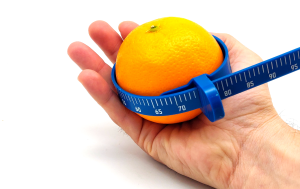
Girdling is a technique that involves making a superficial incision in the bark of the trunk or main branches. The goal is to temporarily interrupt the downward flow of elaborated sap (phloem), causing sugars and nutrients produced by photosynthesis to accumulate in the leaves and fruits above the cut.
This accumulation stimulates:
- Flower induction.
- Better fruit set.
- Increased fruit size and internal quality.
The importance of a fine and precise cut
For girdling to be effective and safe for the tree, the cut must be as fine as possible.
- A fine cut allows the wound to heal quickly, reducing the time the tree is exposed to pathogens.
- The ideal girdling width is approximately 1 mm, enough to interrupt sap flow without excessively damaging the bark.
- Avoiding wide or irregular cuts is key to ensuring the tree’s safety and longevity.
Why is girdling necessary?
In certain growing conditions, citrus trees suffer from yield alternation or low productivity. Girdling helps correct these physiological imbalances.
The main situations where it is recommended include:
- Trees with excess vegetative vigor and poor fruiting.
- Cases with poor fruit set or insufficient fruit size.
- Orchards seeking to stabilize production and achieve more consistent yields year after year.
Problems and precautions in girdling
Although highly useful, girdling requires experience and precision. If performed incorrectly, it can cause permanent damage to the tree.
The most common risks are:
- Cuts that are too deep, damaging the xylem and compromising water transport.
- Poorly healed wounds, which may become entry points for pests and diseases.
- Excessive stress on the tree, if the practice is repeated too often.
✅ To avoid these issues, it is recommended to:
- Use the right, sharp tools.
- Perform the cut at the correct phenological stage.
- Avoid girdling on young or weakened trees.
Benefits of citrus girdling
When carried out properly, girdling provides clear results:
- Improved fruit set in problematic situations.
- Larger size and better internal quality (higher sugar content, better color, firmness).
- Reduced yield alternation, achieving more consistent production.
- Increased profitability, thanks to more uniform and marketable harvests.
M19 girdling tools from Manzana Nules: precision in every cut
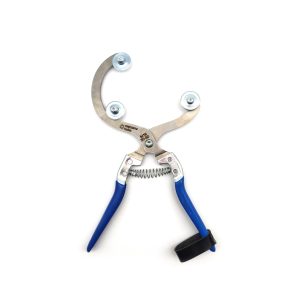
The choice of tool is key for safe and effective girdling. At Manzana Nules, we have developed the M19 girdling tools, designed specifically to make citrus girdling easier, safer, and more precise.
Advantages of the M19 girdling tools:
- Perfect 1 mm cut thanks to their rotating discs, guaranteeing the ideal width for safe and effective girdling.
- Faster healing, as the fine, clean incision allows the bark to recover more quickly.
- Greater safety for the tree, minimizing the risk of irregular wounds that could let diseases in.
- Ergonomic and easy to use, lightweight design that reduces farmer fatigue.
- Durable, made of resistant materials that ensure a long service life even with intensive use.
- Consistent results, providing uniform girdling and real improvements across the orchard.
With the M19 girdling tools, farmers can perform girdling quickly, precisely, and with the best results for both the tree and the harvest.
Conclusion
Citrus girdling is a delicate but highly valuable practice when applied with precision. Its success depends largely on making a fine, regular cut of just 1 mm, which promotes quick and safe healing.
The M19 girdling tools from Manzana Nules are the perfect tool for this task: they guarantee the ideal cut width thanks to their rotating discs, providing farmers with safety, efficiency, and better production outcomes.